Welcome to the most comprehensive resource on Data Acquisition (DAQ) systems available online! Whether you're an engineering student, a research scientist, an industrial automation specialist, or a curious hobbyist, this guide will transform your understanding of how we capture, process, and utilize real-world data. DAQ systems are the unsung heroes behind modern technology—powering everything from medical diagnostics to space exploration. In the following sections, we'll journey from fundamental concepts through advanced implementation techniques, ensuring you gain both theoretical knowledge and practical skills.
1. What Exactly is Data Acquisition (DAQ)?
Data Acquisition (DAQ) is the process of converting real-world physical phenomena into digital data that computers can understand, process, and analyze. At its core, DAQ bridges the gap between the analog world we inhabit and the digital realm of computation. This involves capturing signals from sensors that measure parameters like temperature, pressure, vibration, voltage, current, light intensity, and countless other physical properties, then transforming these continuous analog signals into discrete digital values through analog-to-digital conversion.
Think of DAQ as the nervous system of modern measurement and control systems. Just as our nerves transmit sensory information to our brain for processing, DAQ systems gather data from the environment and deliver it to computers for analysis, visualization, and decision-making. Without DAQ technology, we would be blind to the intricate details of physical processes that shape our world—from monitoring structural integrity in bridges to optimizing chemical reactions in pharmaceutical manufacturing.
2. Why Data Acquisition Matters in Today's World
In our data-driven era, the ability to accurately capture and interpret real-world information is more critical than ever. DAQ systems form the foundation of the Internet of Things (IoT), Industry 4.0, smart infrastructure, environmental monitoring, medical diagnostics, and scientific research. They enable predictive maintenance in manufacturing plants, optimize energy consumption in smart buildings, ensure patient safety in hospitals, and help scientists understand climate change patterns.
Consider the impact: in automotive testing, DAQ systems capture thousands of data points per second during crash tests to improve vehicle safety. In neuroscience, they record electrical activity from hundreds of neurons simultaneously to unlock the mysteries of the brain. In renewable energy, they monitor solar panel efficiency and wind turbine performance to maximize output. The applications are virtually limitless, making DAQ knowledge an invaluable asset across countless industries.
3. The Core Components of Every DAQ System
Every effective DAQ system consists of several essential components working in harmony. First, sensors or transducers convert physical phenomena into electrical signals—thermocouples for temperature, strain gauges for force, accelerometers for vibration, and photodiodes for light. Second, signal conditioning circuitry prepares these raw signals for digitization through amplification, filtering, isolation, and linearization. Third, analog-to-digital converters (ADCs) transform the conditioned analog signals into digital values that computers can process.
Additionally, DAQ systems require data storage mechanisms (from simple files to sophisticated databases), processing capabilities (real-time analysis or post-processing), and user interfaces (from command-line tools to sophisticated graphical dashboards). Understanding how these components interact is crucial for designing systems that meet specific application requirements while maintaining accuracy, reliability, and efficiency.
4. Understanding Analog-to-Digital Conversion (ADC)
Analog-to-Digital Conversion is the heart of any DAQ system. This process involves sampling a continuous analog signal at regular intervals and quantizing each sample to the nearest digital value based on the ADC's resolution. Key ADC characteristics include resolution (typically 8 to 24 bits), sampling rate (samples per second), accuracy, and linearity. Higher resolution provides finer measurement granularity—for example, a 16-bit ADC can distinguish 65,536 different voltage levels within its input range, compared to just 256 levels for an 8-bit ADC.
The Nyquist-Shannon sampling theorem dictates that to accurately reconstruct a signal, the sampling rate must be at least twice the highest frequency component present in the signal. Violating this principle leads to aliasing, where high-frequency components masquerade as lower frequencies in the digitized data. Anti-aliasing filters are therefore essential components in any serious DAQ system, removing frequencies above the Nyquist limit before digitization occurs.
5. The Critical Role of Signal Conditioning
Raw sensor outputs are often unsuitable for direct digitization. They might be too weak (microvolts from thermocouples), contaminated with noise, or nonlinear in their response. Signal conditioning addresses these challenges through several techniques: amplification boosts weak signals to match the ADC's input range; filtering removes unwanted frequency components (like 50/60 Hz power line interference); isolation protects sensitive electronics from high voltages; and linearization corrects nonlinear sensor responses.
For instance, a strain gauge in a Wheatstone bridge configuration might output only millivolts of signal, requiring instrumentation amplifiers with high common-mode rejection ratios. Similarly, thermocouple measurements need cold-junction compensation to account for temperature differences at connection points. Proper signal conditioning can dramatically improve measurement accuracy, sometimes by orders of magnitude, making it a non-negotiable aspect of professional DAQ design.
6. Choosing the Right Sensors for Your Application
Selecting appropriate sensors is fundamental to DAQ success. Considerations include measurement range, accuracy, response time, environmental tolerance (temperature, humidity, vibration), power requirements, output signal type, and cost. For temperature measurement, you might choose between thermocouples (wide range, rugged), RTDs (high accuracy, stability), or thermistors (high sensitivity, limited range). For pressure, options include piezoresistive, capacitive, or resonant sensors, each with distinct advantages.
Always match sensor specifications to your application requirements. In a high-vibration aerospace environment, you'd prioritize ruggedness over ultimate precision. In a medical laboratory, accuracy and stability might outweigh cost considerations. Remember that sensor selection affects every subsequent stage of your DAQ system—from signal conditioning requirements to ADC resolution needs—making this initial decision critically important.
7. Sampling Rate: Finding the Sweet Spot
Determining the optimal sampling rate involves balancing several factors. While the Nyquist theorem provides a theoretical minimum (twice the highest frequency of interest), practical applications often require 5-10 times this rate to accurately capture signal characteristics and accommodate filter roll-off. However, higher sampling rates generate more data, demanding greater storage capacity, processing power, and bandwidth.
Consider your signal's nature: slowly varying temperature might need only 1 sample per second, while audio requires 44.1 kHz, and vibration analysis in machinery might demand 100 kHz or more. Also evaluate your system's capabilities—can your storage handle the data deluge? Can your processor keep up with real-time analysis? Finding the right balance ensures you capture necessary information without overwhelming your system resources.
8. Resolution vs. Accuracy: Understanding the Difference
Many confuse resolution with accuracy, but they represent distinct concepts. Resolution refers to the smallest detectable change in input—the "fineness" of measurement. Accuracy describes how close a measurement is to the true value. A high-resolution system can detect minute changes but might be inaccurate due to calibration errors or environmental factors. Conversely, a low-resolution system might be highly accurate within its limited range.
For example, a 24-bit ADC measuring 0-10V has a theoretical resolution of about 0.6 microvolts. However, if the system has 0.1% gain error and 2mV offset error, its accuracy might only be ±12mV—far worse than its resolution suggests. Always consider both specifications together, along with other factors like noise, linearity, and stability, to understand your system's true performance capabilities.
9. DAQ Hardware Interfaces: USB, Ethernet, PCIe, and More
Modern DAQ systems connect to computers through various interfaces, each with distinct advantages. USB offers plug-and-play convenience and portability, ideal for field measurements and educational applications. Ethernet enables long-distance connections (up to 100m), network integration, and synchronization across multiple devices. PCIe provides the highest bandwidth for demanding applications like high-speed imaging or RF analysis, with direct motherboard connections minimizing latency.
Emerging standards like LXI (LAN eXtensions for Instrumentation) combine Ethernet connectivity with web-based configuration and IEEE 1588 Precision Time Protocol for synchronization. Wireless options (Wi-Fi, Bluetooth) enable mobile and distributed sensing but introduce latency and reliability considerations. Your interface choice should align with data throughput requirements, physical constraints, synchronization needs, and budget limitations.
10. Synchronization: The Key to Multi-Channel Coherence
When acquiring data from multiple channels simultaneously, precise synchronization ensures all measurements share the same time reference. This is critical for applications like structural dynamics (where phase relationships between vibration sensors matter), power quality analysis (requiring simultaneous voltage and current measurements), or audio beamforming (needing precise time alignment across microphone arrays).
Synchronization methods range from simple software triggers (adequate for slow signals) to hardware clock distribution (for high-speed applications). Advanced systems use dedicated sync lines, star topology clock distribution, or network-based protocols like IEEE 1588 PTP for sub-microsecond accuracy across distributed systems. Always verify synchronization performance through loopback tests or known reference signals.
11. Real-Time Processing: Beyond Simple Data Logging
Modern DAQ systems often perform real-time processing to extract meaningful information immediately. This includes digital filtering (removing noise or isolating frequency bands), Fast Fourier Transforms (converting time-domain signals to frequency spectra), statistical calculations (mean, RMS, standard deviation), peak detection, and threshold monitoring. Real-time processing enables immediate feedback for control systems and reduces data storage requirements by saving only relevant information.
Implementation strategies vary: software-based processing on the host computer offers flexibility but limited speed; FPGA-based processing provides deterministic performance for high-speed applications; and dedicated DSP chips balance flexibility with performance. Always profile your processing pipeline to ensure it completes within the sampling interval, preventing data loss or timing jitter.
12. Data Storage Strategies for Long-Term Experiments
Efficient data storage is crucial for experiments running hours, days, or weeks. Considerations include file formats (binary vs. text), compression algorithms, metadata inclusion, and database integration. HDF5 has become the de facto standard for scientific data due to its hierarchical structure, cross-platform compatibility, built-in compression, and ability to handle massive datasets efficiently.
Always embed comprehensive metadata with your data: sampling parameters, sensor calibration coefficients, environmental conditions, operator notes, and timestamps. For high-throughput applications, consider circular buffers that overwrite oldest data when storage fills, or tiered storage that moves older data to slower, cheaper media. Database solutions like InfluxDB (optimized for time-series data) or traditional SQL databases with appropriate indexing can facilitate complex queries and analysis.
13. Building Your First DAQ GUI with Python
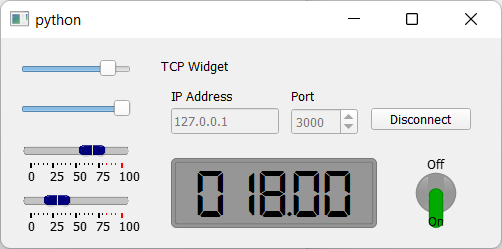
Creating a graphical user interface transforms your DAQ system from a command-line tool into an accessible instrument. Python offers several excellent GUI frameworks: PyQt5/6 provides professional, cross-platform interfaces with extensive widgets; Tkinter is included with Python and sufficient for simpler applications; and matplotlib's animation capabilities enable real-time plotting with minimal code.
A well-designed DAQ GUI should include intuitive controls for configuration (sampling rate, channels, triggers), real-time visualization (oscilloscope-style plots, meters, spectral displays), data management (start/stop logging, file selection), and status indicators (connection status, error messages). Always implement responsive design using threading to prevent the interface from freezing during data acquisition, and provide clear visual feedback for user actions.
14. Error Handling: Building Robust DAQ Systems
Real-world DAQ systems must handle numerous potential failures gracefully: sensor disconnections, communication timeouts, buffer overflows, power fluctuations, and hardware malfunctions. Comprehensive error handling involves try-except blocks for hardware operations, timeouts for all I/O operations, data validation checks, and detailed logging with timestamps. Never assume hardware will behave perfectly—anticipate and plan for failures.
For critical applications, implement redundancy strategies: dual sensors with voting logic, backup communication paths, or fail-safe modes that maintain basic functionality during partial failures. Always validate incoming data against expected ranges—a temperature reading of 10,000°C likely indicates a sensor fault rather than a real measurement. Graceful degradation (continuing with reduced functionality) is preferable to complete system failure.
15. Calibration: Ensuring Measurement Integrity
Calibration establishes the relationship between sensor output and true physical values by comparing measurements against known standards. Regular calibration accounts for sensor drift, amplifier gain changes, ADC nonlinearities, and environmental effects. Calibration procedures typically involve measuring reference values (ice bath for 0°C, precision voltage sources, calibrated weights) and creating correction curves or coefficients.
Document all calibration activities: dates, procedures, reference standards used, environmental conditions, and results. For critical applications, implement automated calibration routines that run during system startup or at scheduled intervals. Remember that calibration is only valid under conditions similar to those during calibration—significant temperature changes or mechanical shocks may require recalibration. Always track calibration due dates to maintain measurement integrity.
16. Advanced Triggering Techniques for Event Capture
Basic DAQ systems continuously record data, but advanced triggering captures information only when specific conditions occur, saving storage and processing resources. Trigger types include level triggers (when signal crosses a threshold), edge triggers (on rising or falling edges), window triggers (when signal enters or leaves a range), and pattern triggers (for digital inputs). More sophisticated systems support hysteresis triggers (to prevent chatter near thresholds) and delay triggers (to capture pre-trigger data).
Hardware triggers provide the lowest latency and highest reliability for critical applications, while software triggers offer more flexibility for complex conditions. Implementing these requires careful consideration of trigger latency, rearm time, and dead time between triggers. Always verify trigger performance with known test signals to ensure reliable event capture.
17. Distributed DAQ Systems: Scaling Beyond Single Devices
Large-scale applications like structural health monitoring of bridges, environmental sensor networks, or factory-wide process control require distributed DAQ architectures with multiple acquisition nodes. Key challenges include time synchronization across nodes, data aggregation, network reliability, and power management for remote sensors. Modern distributed systems often use IoT protocols (MQTT, CoAP) for efficient communication.
Edge computing nodes preprocess data locally before transmission, reducing bandwidth requirements and enabling real-time decisions at the source. Time synchronization across nodes is critical—consider GPS timing for outdoor installations or IEEE 1588 PTP for sub-millisecond accuracy over Ethernet networks. Design for scalability from the beginning, using modular architectures that allow easy addition of new nodes.
18. Security in Networked DAQ Systems
As DAQ systems become increasingly connected, security is paramount. Networked DAQ devices can be entry points for cyber attacks, potentially compromising entire industrial control systems. Implement security best practices: strong authentication (multi-factor where possible), encrypted communications (TLS/SSL), regular firmware updates, network segmentation (isolating DAQ networks from corporate networks), and principle of least privilege for user accounts.
For critical infrastructure, consider air-gapped systems or unidirectional gateways that prevent remote access while allowing data export. Always change default passwords, disable unused services, and implement intrusion detection systems. Security should be designed in from the beginning—not added as an afterthought—and regularly tested through vulnerability assessments.
19. Performance Optimization for High-Speed DAQ
High-speed DAQ applications (MHz sampling rates) demand careful performance optimization. Key strategies include using compiled languages (C/C++) for critical paths, leveraging DMA (Direct Memory Access) to reduce CPU overhead, optimizing memory allocation (pre-allocating buffers to avoid fragmentation), and minimizing system calls. Profiling tools help identify bottlenecks in data acquisition and processing pipelines.
For Python-based systems, consider using NumPy for vectorized operations, Cython for compiling performance-critical sections, or interfacing with optimized C libraries through ctypes or CFFI. Real-time operating systems (RTOS) or Linux with real-time patches can provide deterministic timing for the most demanding applications. Always measure actual performance under realistic conditions—specifications often differ from real-world capabilities.
20. Future Trends in DAQ Technology
DAQ technology continues to evolve rapidly. Key trends include integration with AI/ML for predictive analytics and anomaly detection, edge computing for real-time decision making at the data source, wireless sensor networks with energy harvesting for maintenance-free operation, and quantum sensors for unprecedented sensitivity. Cloud integration enables remote monitoring, collaborative analysis, and elastic scaling of storage and compute resources.
Open-source hardware (like Arduino, Raspberry Pi with DAQ hats) is democratizing access to DAQ capabilities. Software-defined instrumentation allows reconfiguring hardware functionality through software updates. As IoT expands, expect DAQ systems to become more intelligent, autonomous, and seamlessly integrated into larger digital ecosystems, transforming how we interact with and understand the physical world.
21. Getting Started with Open-Source DAQ Tools
Open-source tools provide accessible entry points into DAQ development. Python libraries like PyDAQmx (for National Instruments hardware), PyVISA (for instrument control), and SciPy (for signal processing) form a powerful ecosystem. Hardware platforms like Arduino, Raspberry Pi with ADC hats, and BeagleBone offer affordable options for learning and prototyping. Community resources like GitHub repositories, forums, and tutorials accelerate the learning process.
Start with simple projects: reading a temperature sensor with an Arduino, logging data to a CSV file, and visualizing results with matplotlib. Gradually incorporate more advanced concepts like real-time plotting, data validation, and web interfaces. The open-source community provides extensive documentation, tutorials, and forums for support—don't hesitate to ask questions and contribute your own solutions.
22. Best Practices for DAQ System Design
Successful DAQ system design follows key principles: define requirements clearly (sampling rate, resolution, channels, accuracy), choose appropriate hardware for the environment, implement thorough error handling, document everything, and validate with real-world testing. Always consider the entire data lifecycle—from acquisition through analysis to archiving and eventual disposal.
Modular design allows for easier maintenance and upgrades. Version control your configuration and software using Git. Implement automated tests for critical functionality. Most importantly, involve end-users early in the design process to ensure the system meets actual needs rather than perceived requirements. Remember that the best DAQ system is not necessarily the most feature-rich, but the one that reliably solves the specific problem at hand.
23. Understanding DAQ Specifications: Decoding the Datasheet
Manufacturer datasheets contain critical information for selecting appropriate DAQ hardware, but they can be overwhelming. Key specifications to understand include: sampling rate (maximum and per-channel), resolution (bits), input range (voltage levels), accuracy (typically as % of reading + offset), noise floor (smallest detectable signal), common-mode rejection ratio (CMRR), and crosstalk between channels.
Pay special attention to conditions under which specifications are measured—many impressive numbers apply only under ideal laboratory conditions. Look for specifications like "typical" versus "guaranteed" performance, and understand how environmental factors (temperature, humidity) affect accuracy. When in doubt, request evaluation units to test hardware under your actual operating conditions before making large purchases.
24. Grounding and Shielding: Preventing Noise Intrusion
Electrical noise is the nemesis of accurate DAQ measurements. Proper grounding and shielding techniques are essential for clean signals. Single-point grounding prevents ground loops that introduce 50/60 Hz hum. Shielded cables with proper termination (shield connected at one end only for low-frequency signals) block electromagnetic interference. Twisted-pair wiring reduces magnetic field coupling.
For high-impedance signals (like thermocouples), use guarded inputs and keep leads short. In electrically noisy environments (near motors, VFDs, or radio transmitters), consider fiber optic isolation or differential measurements with high common-mode rejection. Always verify noise levels with the system operating under real-world conditions—lab tests often miss intermittent interference sources.
25. Power Supply Considerations for DAQ Systems
Clean, stable power is essential for accurate DAQ measurements. Switching power supplies can introduce high-frequency noise into sensitive analog circuits. Linear regulators provide cleaner power but are less efficient. For portable systems, consider battery power with proper regulation. Always use adequate decoupling capacitors near ADCs and amplifiers to filter high-frequency noise on power rails.
For systems with both analog and digital sections, use separate power supplies or regulators with proper filtering between domains. Consider power sequencing requirements—some components need specific power-up orders to prevent damage. Monitor power supply voltages during operation to detect brownouts or transients that could corrupt measurements.
26. Temperature Effects on DAQ Accuracy
Temperature variations significantly impact DAQ accuracy through several mechanisms: sensor drift (RTDs, thermistors), amplifier offset/gain changes, ADC reference voltage shifts, and resistor value changes in signal conditioning circuits. High-precision systems often include temperature sensors to compensate for these effects in software.
For critical applications, consider temperature-controlled enclosures or ovens for sensitive components. Allow sufficient warm-up time for systems to reach thermal equilibrium before taking precision measurements. Understand your components' temperature coefficients—datasheets typically specify performance over industrial (-40°C to +85°C) or commercial (0°C to +70°C) temperature ranges.
27. Vibration and Mechanical Stress in DAQ Environments
Mechanical vibrations can cause intermittent connections, microphonics in cables, and stress-induced errors in components. In high-vibration environments (automotive testing, aerospace, industrial machinery), use robust connectors with positive locking mechanisms, strain relief on cables, and conformal coating on circuit boards.
Consider the mechanical mounting of your DAQ system—vibration isolation mounts may be necessary for sensitive measurements. Test your system under actual vibration conditions to identify potential failure points. For portable systems, design for shock resistance using appropriate packaging and component selection.
28. DAQ for Scientific Research: Special Considerations
Scientific DAQ applications often demand extreme precision, low noise, and meticulous documentation. Requirements include traceable calibration to national standards, detailed uncertainty budgets, environmental monitoring (temperature, humidity, EMI), and comprehensive metadata recording. Data integrity is paramount—implement checksums, redundant storage, and audit trails.
Consider specialized techniques like lock-in amplification for extracting signals buried in noise, or cryogenic DAQ for low-temperature physics experiments. Collaborate with metrology experts to ensure your measurement system meets publication standards. Always document your methodology thoroughly to enable replication by other researchers.
29. Industrial DAQ: Reliability in Harsh Environments
Industrial DAQ systems must operate reliably in challenging conditions: wide temperature ranges, high humidity, dust, chemical exposure, and electrical noise. Select hardware with appropriate ingress protection (IP) ratings, conformal coating on circuit boards, and industrial temperature range components. Redundancy and fail-safe designs are often required for critical processes.
Consider communication protocols designed for industrial environments (Modbus, Profibus, CAN bus) that include error detection and correction. Implement predictive maintenance by monitoring DAQ system health parameters (temperature, supply voltages, error counters). Design for easy maintenance and component replacement to minimize downtime.
30. Medical DAQ: Safety and Regulatory Compliance
Medical DAQ systems face stringent safety and regulatory requirements (FDA, CE Mark, IEC 60601). Patient isolation is critical—use medical-grade isolation amplifiers with high dielectric strength. Implement multiple safety layers: hardware limits, software validation, and independent monitoring circuits. All components must be biocompatible if in contact with patients.
Documentation requirements are extensive: design history files, risk analyses, verification/validation protocols, and traceability matrices. Consider electromagnetic compatibility (EMC) testing to ensure your device doesn't interfere with other medical equipment and isn't susceptible to interference. Engage regulatory consultants early in the design process.
31. Automotive DAQ: Testing Under Extreme Conditions
Automotive DAQ systems must withstand wide temperature ranges (-40°C to +125°C), high vibration, and electrical transients (load dumps, ESD). Use automotive-grade components with AEC-Q100 qualification. Implement robust communication protocols like CAN FD that handle high noise environments. Synchronize measurements across multiple ECUs using protocols like XCP or CCP.
Consider the physical constraints of vehicle testing—compact, lightweight designs with minimal cabling. Battery-powered operation with long life is often necessary. Implement data compression to handle the massive data volumes generated during vehicle testing (thousands of channels at high rates). Always validate systems under actual road conditions.
32. Aerospace DAQ: Precision in Critical Applications
Aerospace DAQ demands extreme reliability, precision, and radiation tolerance. Components must meet stringent qualification standards (MIL-STD, DO-160). Redundancy is often required for flight-critical measurements. Weight and power consumption are critical constraints—optimize for minimal size and energy use.
Consider specialized techniques like time-division multiplexing to reduce wiring harness weight. Implement rigorous testing protocols including thermal cycling, vibration, and radiation exposure. Documentation must meet aerospace quality standards (AS9100). Always design for maintainability and ease of calibration in field conditions.
33. Environmental DAQ: Long-Term Field Deployments
Environmental monitoring DAQ systems often operate unattended for months or years in remote locations. Power efficiency is critical—use low-power components, sleep modes, and energy harvesting (solar, wind). Weatherproof enclosures with appropriate IP ratings protect against elements. Remote diagnostics and over-the-air updates minimize site visits.
Consider data transmission challenges—cellular, satellite, or LoRaWAN depending on location. Implement data validation to detect sensor fouling or damage. Use robust data storage that survives power interruptions. Design for easy sensor replacement and calibration in the field. Always include anti-theft measures for valuable equipment.
34. Educational DAQ: Learning Through Hands-On Projects
Educational DAQ systems should prioritize affordability, safety, and ease of use. Platforms like Arduino, Raspberry Pi, and educational DAQ kits provide accessible entry points. Focus on projects that demonstrate fundamental concepts: measuring temperature, recording sound, analyzing vibrations, or monitoring light levels.
Develop curriculum materials that progress from simple measurements to complex systems. Include troubleshooting exercises to build diagnostic skills. Encourage open-ended projects that apply DAQ concepts to students' interests. Always emphasize safety—use current-limited power supplies and proper isolation for mains-connected experiments.
35. DAQ System Validation: Proving Performance
Before deploying any DAQ system, validate its performance against requirements. Create test procedures that verify accuracy, noise floor, frequency response, crosstalk, and synchronization. Use calibrated reference sources and known test signals. Document all validation results thoroughly.
Consider environmental testing—operate the system under expected temperature, humidity, and vibration conditions. Perform long-term stability tests to identify drift or intermittent failures. For critical applications, implement continuous self-diagnostics that monitor system health during operation. Validation isn't a one-time activity—it should be repeated after any significant modification.
36. Troubleshooting Common DAQ Problems
Even well-designed DAQ systems encounter issues. Common problems include noisy measurements (check grounding, shielding, power supplies), missing data (verify buffer sizes, processing speed), synchronization errors (inspect clock distribution), and calibration drift (monitor reference standards). Develop a systematic troubleshooting approach: isolate components, verify with known signals, and eliminate variables methodically.
Maintain detailed logs of system behavior and environmental conditions. Create diagnostic tools that provide visibility into internal system states. For intermittent problems, implement continuous monitoring that captures data during failure events. Always document solutions to build institutional knowledge for future issues.
37. DAQ Software Architecture Patterns
Well-structured DAQ software follows established architectural patterns. The producer-consumer pattern separates data acquisition (producer) from processing/storage (consumer) using thread-safe queues. The state machine pattern manages system modes (idle, acquiring, paused). The observer pattern notifies multiple components of data updates without tight coupling.
Consider using configuration files rather than hard-coded parameters to enable easy adaptation to different hardware or requirements. Implement plugin architectures for processing modules to allow adding new analysis capabilities without modifying core acquisition code. Always separate hardware abstraction layers from application logic to facilitate hardware upgrades or replacements.
38. Data Visualization Best Practices for DAQ
Effective data visualization transforms raw numbers into actionable insights. Choose appropriate plot types: time-series for temporal data, histograms for distributions, spectrograms for frequency content over time, and scatter plots for correlations. Avoid chart junk—focus on clear data presentation with proper labeling, scaling, and color schemes.
For real-time displays, optimize rendering performance to maintain smooth updates. Implement interactive features like zooming, panning, and cursor measurements. Consider multiple synchronized views for complex datasets. Always include units, timestamps, and channel labels. Remember that the goal is insight—not just pretty pictures.
39. DAQ in the Cloud: Modern Data Management
Cloud integration transforms DAQ systems from isolated instruments into connected data sources. Benefits include elastic storage scaling, remote access from anywhere, collaborative analysis, and integration with other cloud services (AI/ML, databases, visualization tools). Use secure protocols (HTTPS, MQTT over TLS) for data transmission.
Consider edge computing to preprocess data before cloud transmission—reducing bandwidth costs and enabling real-time decisions. Implement data lifecycle policies that automatically archive or delete old data. Use cloud-native services like AWS IoT Core, Azure IoT Hub, or Google Cloud IoT for device management and data ingestion. Always design with data privacy and compliance requirements in mind.
40. Building a Career in DAQ Engineering
DAQ expertise opens doors across numerous industries: aerospace, automotive, medical devices, industrial automation, scientific research, and energy. Develop a strong foundation in both hardware (electronics, sensors) and software (programming, data analysis). Gain hands-on experience through projects, internships, or open-source contributions.
Specialize in areas matching your interests: high-speed DAQ, low-noise design, embedded systems, or data science. Stay current with emerging technologies through conferences (IEEE IMS, Sensors Expo), journals, and online courses. Build a portfolio demonstrating your skills—GitHub repositories, project documentation, or published papers. Remember that the best DAQ engineers combine technical depth with practical problem-solving abilities.
41. The Ethics of Data Acquisition
As DAQ systems become more pervasive, ethical considerations grow increasingly important. Respect privacy—obtain informed consent for data collection involving people, and anonymize data where possible. Ensure data security to prevent unauthorized access or misuse. Consider the environmental impact of your systems—design for energy efficiency and recyclability.
Be transparent about data collection practices and limitations. Avoid creating systems that enable surveillance without proper oversight. Consider potential dual-use applications—could your technology be misused? As engineers, we have a responsibility to consider the broader societal implications of our work and advocate for ethical practices within our organizations.
42. Conclusion: Your DAQ Journey Begins Now
You've just completed an extensive tour of the Data Acquisition landscape—from fundamental principles to advanced implementation techniques across diverse applications. Remember that mastery comes through practice: start with simple projects, gradually incorporate more complex concepts, and never stop learning. The DAQ field evolves rapidly, with new technologies constantly emerging to solve measurement challenges we haven't even imagined yet.
As you apply these concepts to your own projects, focus on solving real problems rather than chasing technical specifications. The most elegant DAQ system is the one that reliably delivers the right data to answer your specific question. Keep this guide as a reference, but more importantly, get your hands dirty with actual hardware and software. The world of physical measurement awaits your exploration!